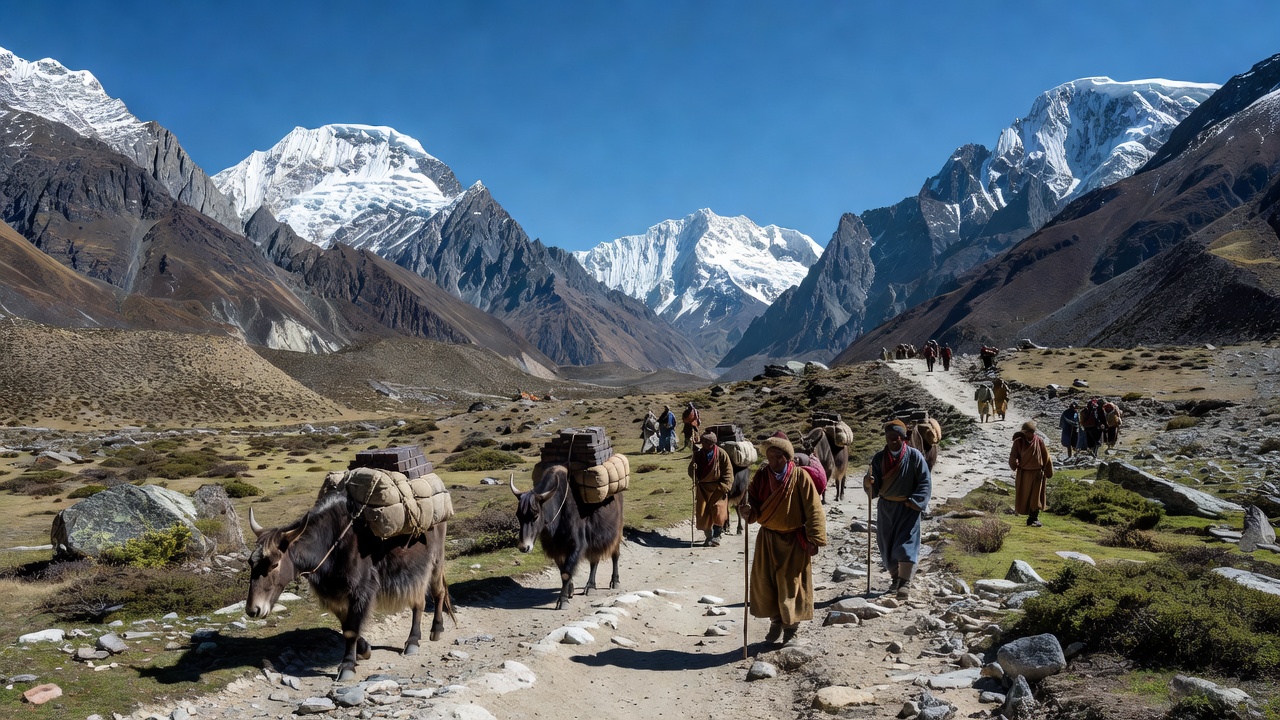
Origins of the Tea-Horse Trade
For over a thousand years, human porters and mule caravans carried heavy packs of compressed brick tea from the lush hills of Yunnan over vertical ridges exceeding 4,000 meters in elevation into Tibet. In return, Song and Tang dynasty generals acquired the high-altitude horses essential for military cavalry operations.
"A porter would carry ninety kilograms of tea bricks on his back, wearing iron-tipped shoes to bite into the vertical ice of the high passes." — Field Notes from Shaxi Valley
Key Trading Hubs
- Shaxi Ancient Town: The only surviving intact market square on the Tea Horse Road, complete with historic theatre stages, ancient inns, and stone bridges.
- Lijiang Old Town: A Naxi kingdom crossroads where tea caravans regrouped before entering the Tibetan mountain passes.
- Deqen and Shangri-La: The high-altitude gateway staging posts where tea packs were transferred from mules to Tibetan yaks.
Geography & Preservation
Modern field mapping by our expedition team has cataloged over 300 kilometers of original flagstone paving remaining intact in deep forest ravines. Preservation projects continue across the Hengduan Mountains.